

Givinostat approved for use in NHS England
On a landmark day for our community, we are delighted to share that the National Institute for Health and Care Excellence (NICE) has recommended givinostat (brand name Duvyzat) for use on the NHS in England.
In final draft guidance issued Friday, May 8, 2026, NICE approved the treatment for people with Duchenne muscular dystrophy (DMD) who are ambulant (able to walk or stand), aged six and older.
After a long and challenging NICE appraisal process that lasted almost two years, and 18 months after the treatment was approved as safe and effective by the Medicines and Healthcare products regulatory agency, this marks a pivotal moment for people with DMD.
There are now two approved treatments for DMD available to patients in England and Scotland. This represents significant progress in the treatment of this rare, devastating genetic condition that causes progressive muscle weakness and eventually impacts the heart and lungs.
The news offers real hope for children and young people with Duchenne and their families and is the culmination of almost 14 years of work by Joining Jack, our partners and other organisations, helping to drive advances in research, expand clinical trials and accelerate access to new treatments in the UK.
A victory for the community
Alongside our partners and the national patient charity, Duchenne UK, Joining Jack played a key role in NICE’s assessment of givinostat and in helping secure this breakthrough alongside other patient organisations including Duchenne UK, Muscular Dystrophy UK, Pathfinders Neuromuscular Alliance and Action Duchenne.
We represented the community throughout the NICE appraisal process, as well as nominating parents of children and young people living with DMD to provide their views on the treatment and share their lived experience, as patient experts.
Experts included our co-founder, Alex Johnson and Jack,18, who lives with Duchenne, Emma Hallam, CEO and founder of Alex’s Wish, whose son Alex lives with Duchenne, Fleur Chandler, a noted health economist and market access specialist, who is also mum to Dom, 19, who has Duchenne and Jon Hastie, CEO of Pathfinders Neuromuscular Alliance, who lives with Duchenne.
All our incredible community representatives spoke powerfully about the urgent need for this treatment and the difference it could make to families, whilst bravely sharing their own experiences during the NICE Committee meetings on givinostat.
Through HERCULES, Duchenne UK also built critical evidence on the real-world impact of DMD, which was used in our submission to NICE and referred to in the Committee meetings to help demonstrate the potential quality of life and wider benefits of the medicine.
In the early stages of the drug’s development, Duchenne Hub UK, a partnership between Duchenne UK and the John Walton Muscular Dystrophy Research Centre at Newcastle University, which helped establish a network of clinical trial sites around the country, hosted givinostat clinical trials.
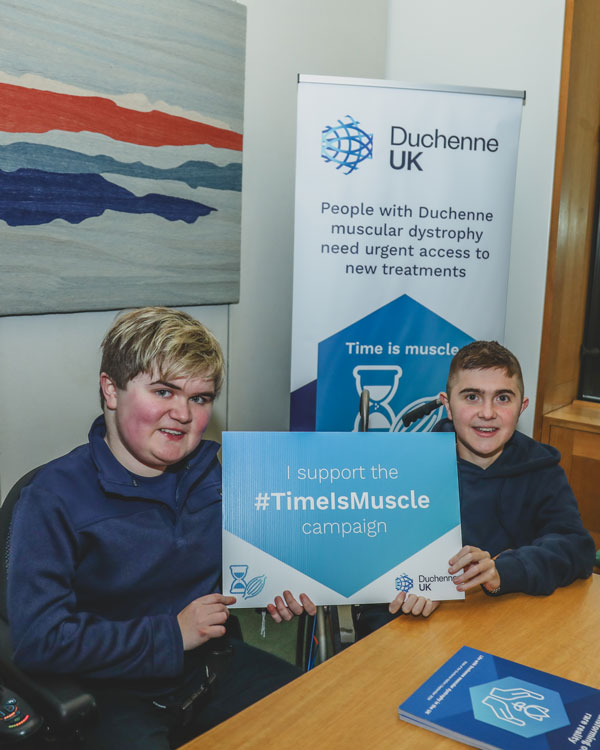
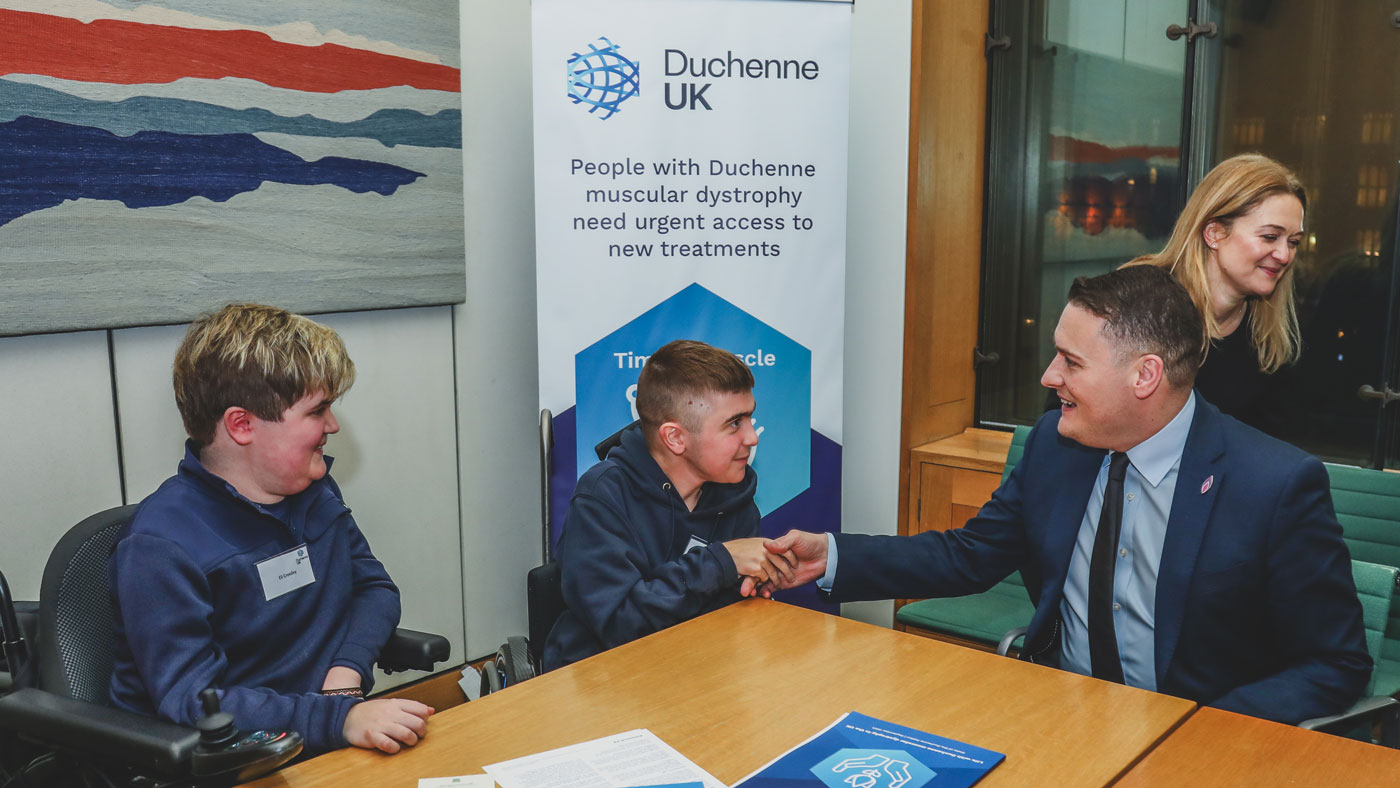
We would also like to thank the Duchenne community for your continued commitment, determination and support. From those who took part in our Time is Muscle campaign and wrote to their MP, the MHRA or NICE, bravely shared their family’s story with the media or attended one of our parliamentary events, to everyone who donates to and raises funds to support our work and make progress like this possible.
Alex said: “While we celebrate givinostat’s approval today, it has been a long, agonising process to get us to this point. It has taken NICE almost two years to make a decision. During that time, many families were left without access to this medicine, while their child’s condition progressed and they lost mobility and function, which once lost, can never be regained in DMD.
“Meanwhile, under this guidance, patients who are unable to walk or stand, will still be unable to access givinostat.
“This experience has underlined the need for urgent reform to ensure that drugs for rare, severe, paediatric-onset diseases like DMD, are being assessed and valued appropriately and to prevent unnecessary delays for children and families seeking access to them, ensuring that they can benefit from the scientific advances being made.
“We will continue to push for much needed regulatory reform and to accelerate access to new treatment options for everyone with Duchenne.”
Emily Reuben, co-founder and chief executive of Duchenne UK, whose son Eli lives with Duchenne, said: “The approval of givinostat represents a significant breakthrough for people with Duchenne muscular dystrophy (DMD) and their families. Driving Duchenne research and helping bring forward new treatments is a core part of our mission at Duchenne UK, and we are delighted to see this now coming to fruition.
“We hope today’s decision will make this treatment available swiftly to all eligible patients in England and end the devastating postcode lottery of access that families have faced across the UK.
“We are disappointed that this approval is restricted to people with Duchenne who can walk or stand meaning that anyone who is unable to walk or stand will not be given access under this guidance. We are urging the relevant stakeholders to look at all available options to make givinostat available to these patients, who desperately need new treatment options.”
About givinostat
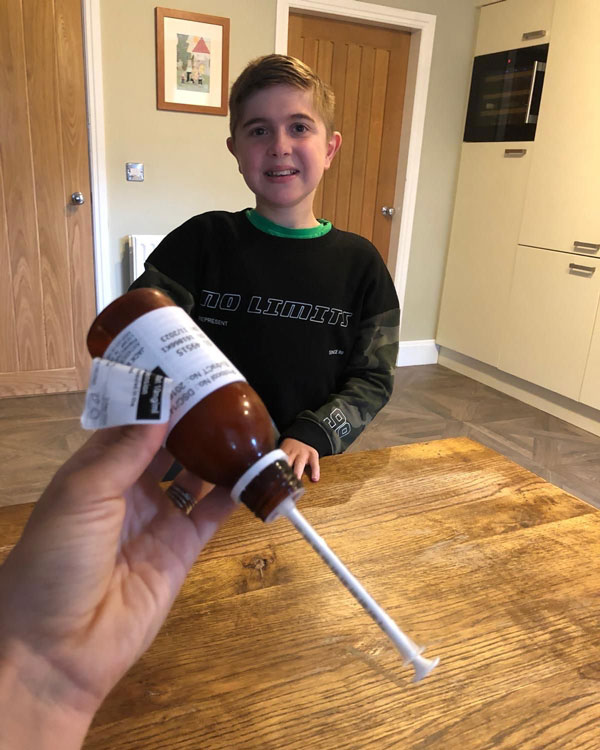
Givinostat (brand name Duvyzat) is a histone deacetylase (HDAC) inhibitor that has been shown in clinical trials to slow the progression of Duchenne in ambulant boys. While it is not a cure, evidence suggests that it can help slow down the progression of this relentless disease and preserve muscle function for longer.
It received regulatory approval in the UK in December 2024, following a review by the Medicines and Healthcare products Regulatory Agency (MHRA). The NICE recommendation confirms that givinostat can now be funded for routine use by the NHS in England for those who meet the eligibility criteria.
What the NICE decision means
With NICE’s final draft guidance now published, NHS England can move forward with arrangements to make givinostat available routinely to all eligible patients through the NHS. We are calling for this to happen as quickly and consistently as possible, so that eligible children and young people can access the treatment without further delay.
This decision is especially important for families who have not previously been able to access givinostat through the Early Access Programme (EAP).
What is the timeline for givinostat to be made available routinely?
The final draft guidance published today is now subject to a 15-day consultation period, during which time stakeholders can raise resolution requests in relation to factual errors or breaches of process. In a positive decision such as this, the consultation period is generally a formality.
Once the consultation period ends, unless any issues are raised, final NICE guidance will be published. At this point, under the NHS Constitution, NHS Trusts have 90 days to make the medicine available to patients.
What do this mean for people already receiving givinostat through the EAP?
Since October 2024, the company that makes givinostat, Italfarmaco and its UK’s arm, ITF Pharma UK, had been making givinostat available to the NHS free of charge through an Early Access Programme (EAP). Many NHS Trusts with specialist neuromuscular centres are therefore already prescribing the treatment to ambulant patients under their care.
The transition from receiving givinostat via the EAP to routine access via NHS England should be seamless. You should not experience a disruption in receiving your prescription but depending on where you live and which NHS Trust you fall under, there may be a change in how you receive your medicine. Your medical team will let you know of any changes well in advance and will be able to answer any questions or concerns you might have.
What does this mean for access to givinostat in the rest of the UK?
Givinostat has already been approved for use in NHS Scotland and is being made available to eligible patients there. NICE guidance is typically adopted in Wales and Northern Ireland, so we hope to quickly see similar progress there.
Unlike in England, the EAP has been fully set up in Wales and Northern Ireland, so anyone eligible for it should already be receiving it.
In areas in England where givinostat was not being delivered through the EAP, the relevant NHS Trusts will now need to take action to make the medicine available to patients within 90 days of the final NICE guidance being published. Duchenne UK will be urging the four NHS Trusts not participating in the EAP to act swiftly and make givinostat available to patients, as soon as possible within that period.
Will non-ambulant patients with DMD receive givinostat?
The NICE guidance only recommends givinostat for ambulant patients over the age of six, with ambulant defined as those able to walk or stand when they begin treatment. People who lose their ability to walk or stand whilst receiving givinostat would be able to continue treatment for as long as it is still deemed clinically beneficial by their medical team, and they wish to do so.
We are extremely disappointed that the treatment is not currently being made available to patients who are no longer able to walk or stand (non-ambulant). Unfortunately, whilst we believe these patients could also benefit from this treatment, there was limited data available to demonstrate this during the NICE appraisal.
As longer-term data on the benefits of givinostat emerges, we hope that NICE will revisit this decision. In the meantime, we are continuing to work with ITF Pharma UK, clinicians and regulators and urging all stakeholders to identify a way for non-ambulant patients to have the opportunity to potentially benefit from givinostat. We will be doing all we can to secure access for these patients who desperately need new treatment options.
What’s next?
While today’s announcement is an important milestone, this lengthy and difficult approval process has shown us that there is still much more to do to accelerate access to treatment for people with DMD.
We will be championing reform to ensure vital new treatments are assessed appropriately and reach patients faster. These processes must better reflect the realities of rare, severe paediatric-onset diseases such as Duchenne, where traditional cost‑effectiveness models and prolonged appraisal timelines can delay access to life‑changing treatments and prevent patients from benefiting from scientific advances.